Using the tiles table
The tiles table provides detailed information about the individual tiles within a dataset.
-
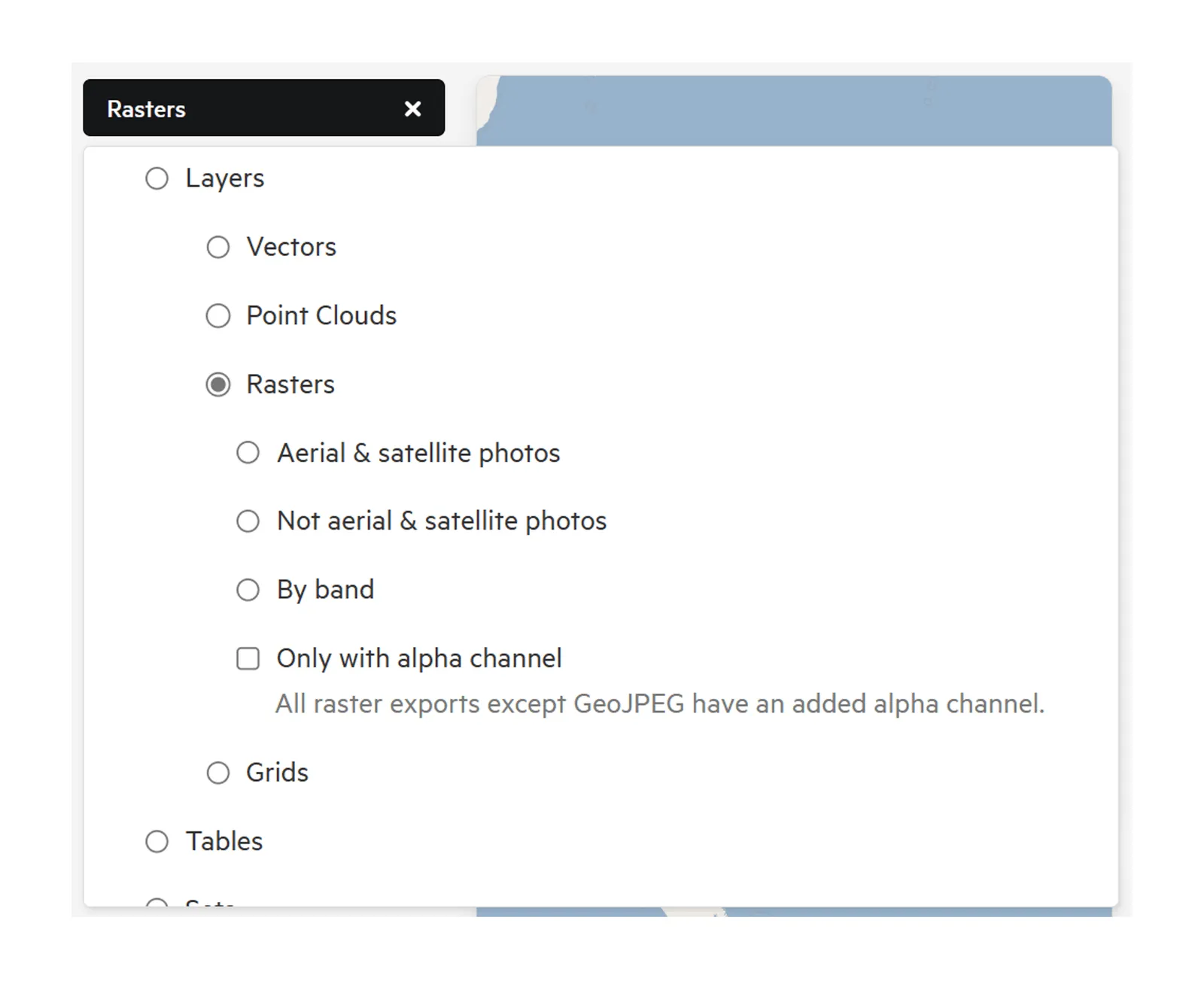
Search, filter and add the relevant dataset to the map
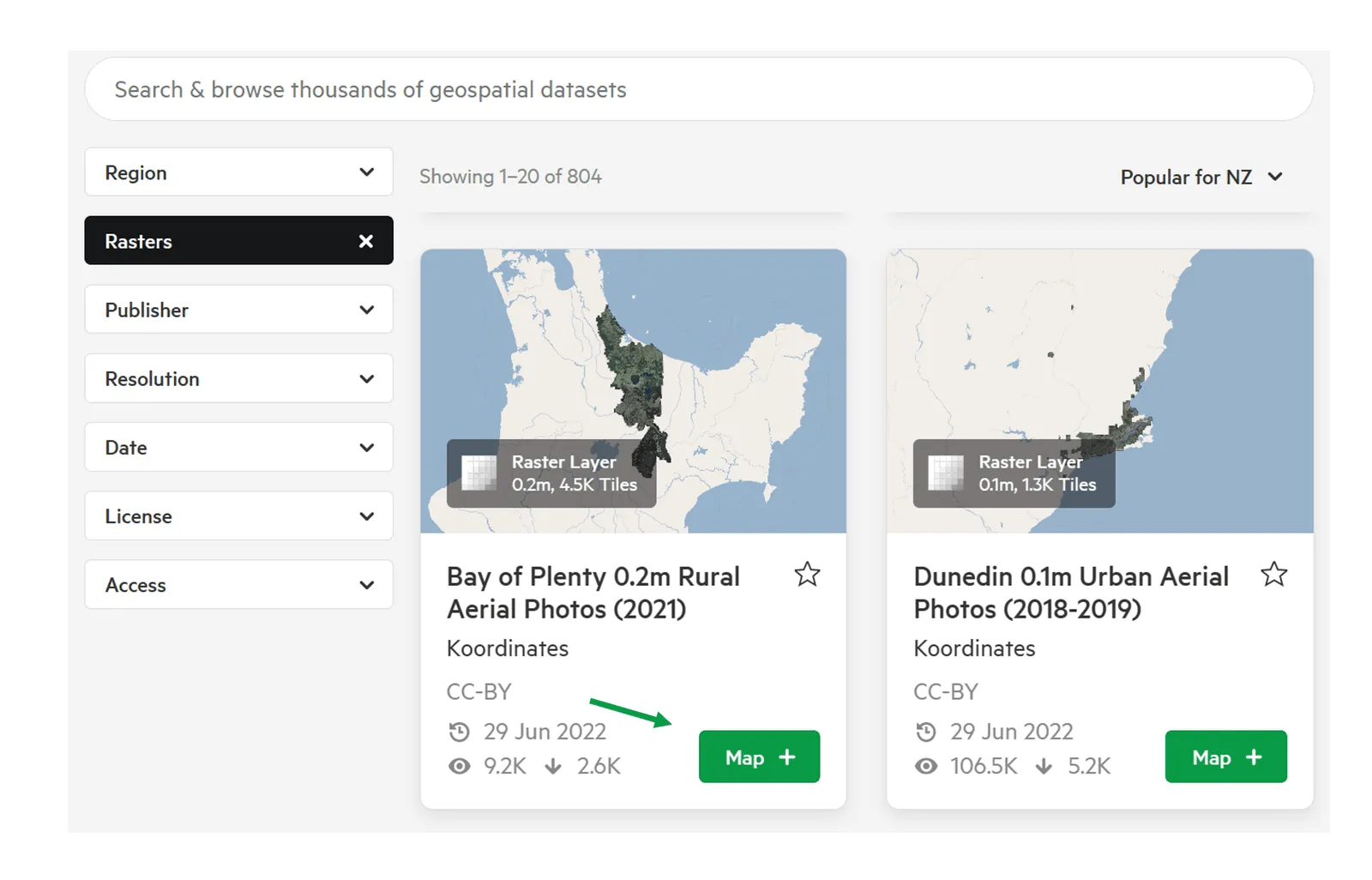
Tiled layers are usually raster, grid or point cloud data.
-
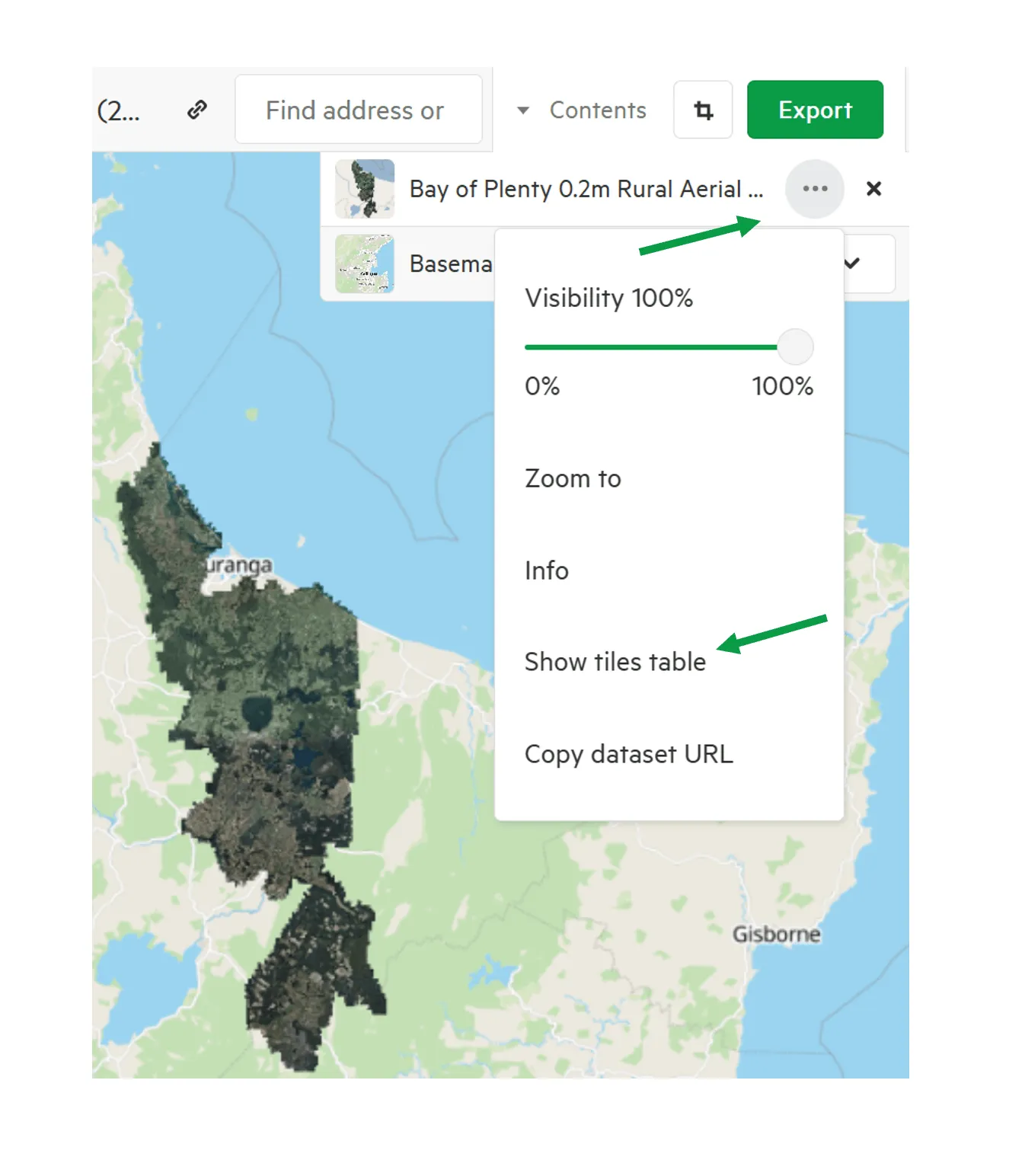
In the layer list, open the layer’s menu and select Show tiles table
The tiles table opens.
-
Browse the tiles
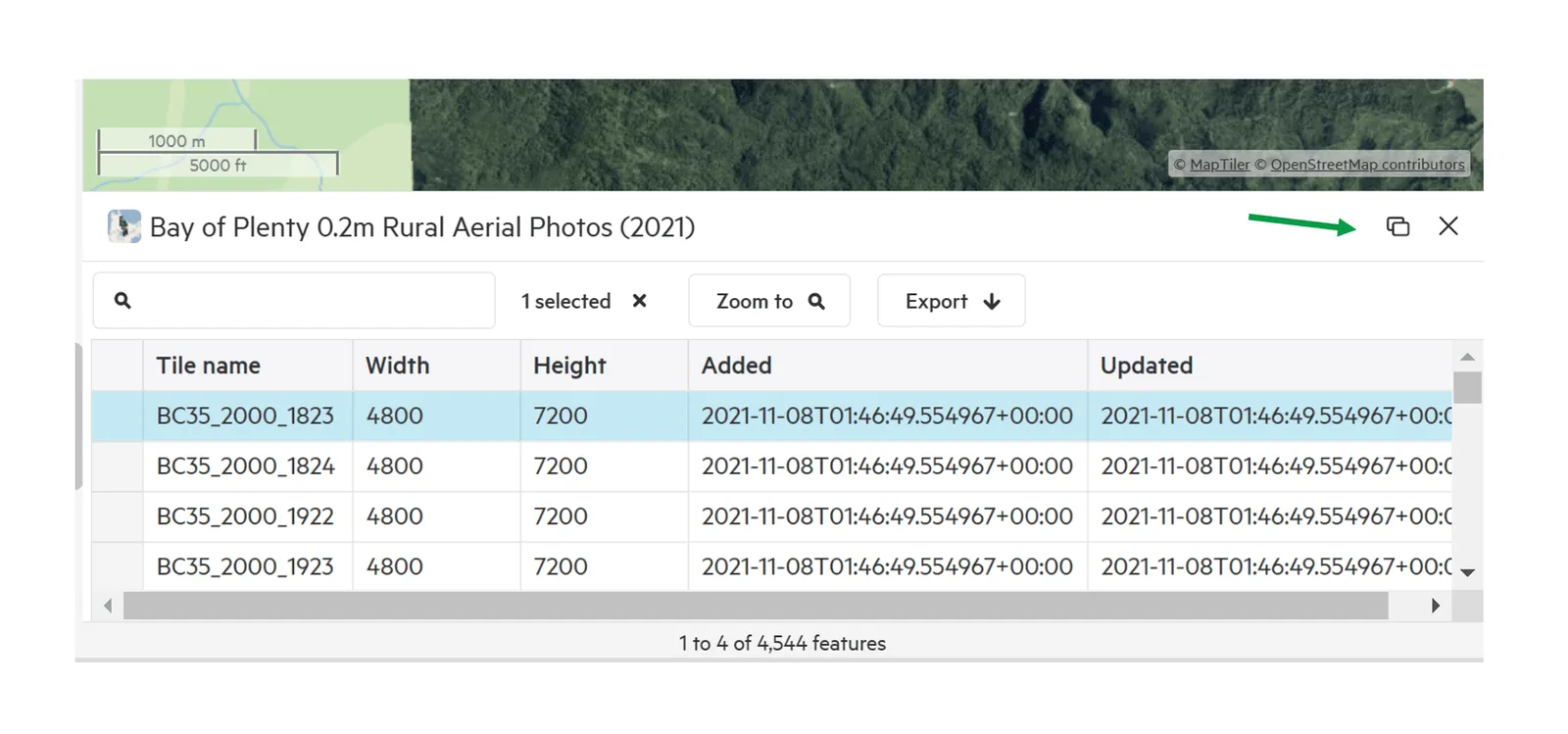
The tiles table lists every tile in the dataset, with information about each one, such as its name and size and when it was added and updated.
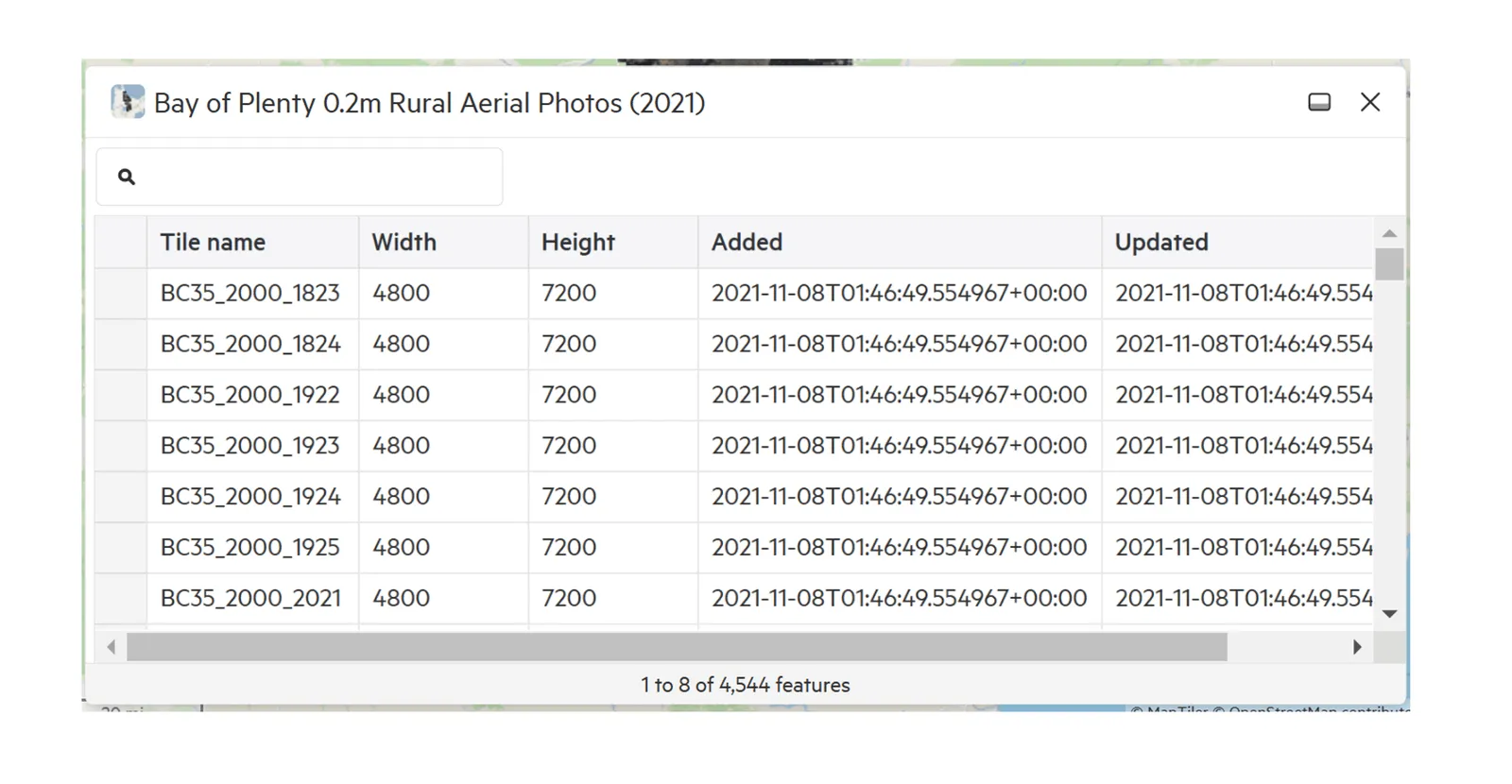
Right-click a tile to see its options:
- Zoom to tile: moves the map to the tile.
- Export tile: opens the export window to export only that tile.
- Copy cell value: copies the value you right-clicked.
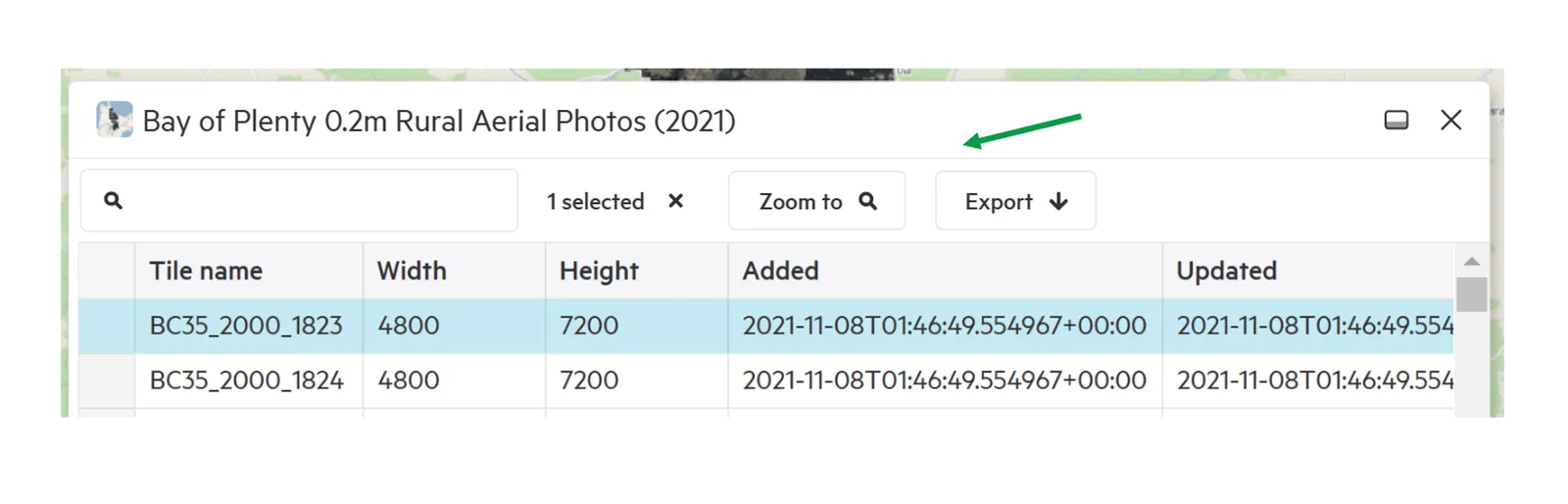
To find out more about exporting, see The export page.
Tiles table options
Section titled “Tiles table options”Select multiple tiles
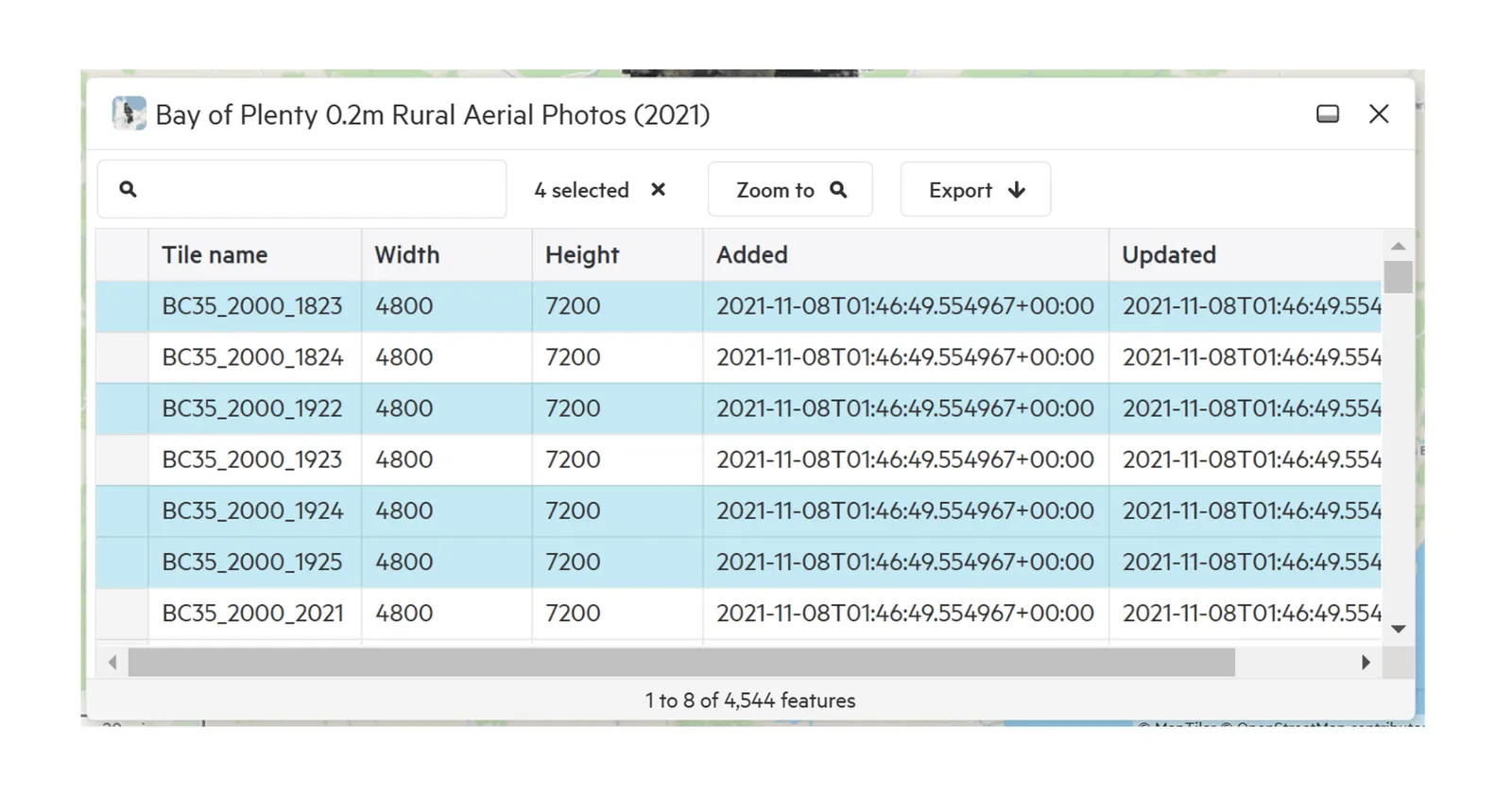
Section titled “Select multiple tiles”To select several tiles, hold down Ctrl (Cmd on a Mac) and select each tile. You can then zoom to or export all the selected tiles, from the right-click menu or the buttons above the table.
Dock or float the table
Section titled “Dock or float the table”To dock the tiles table underneath the map, select Dock window.
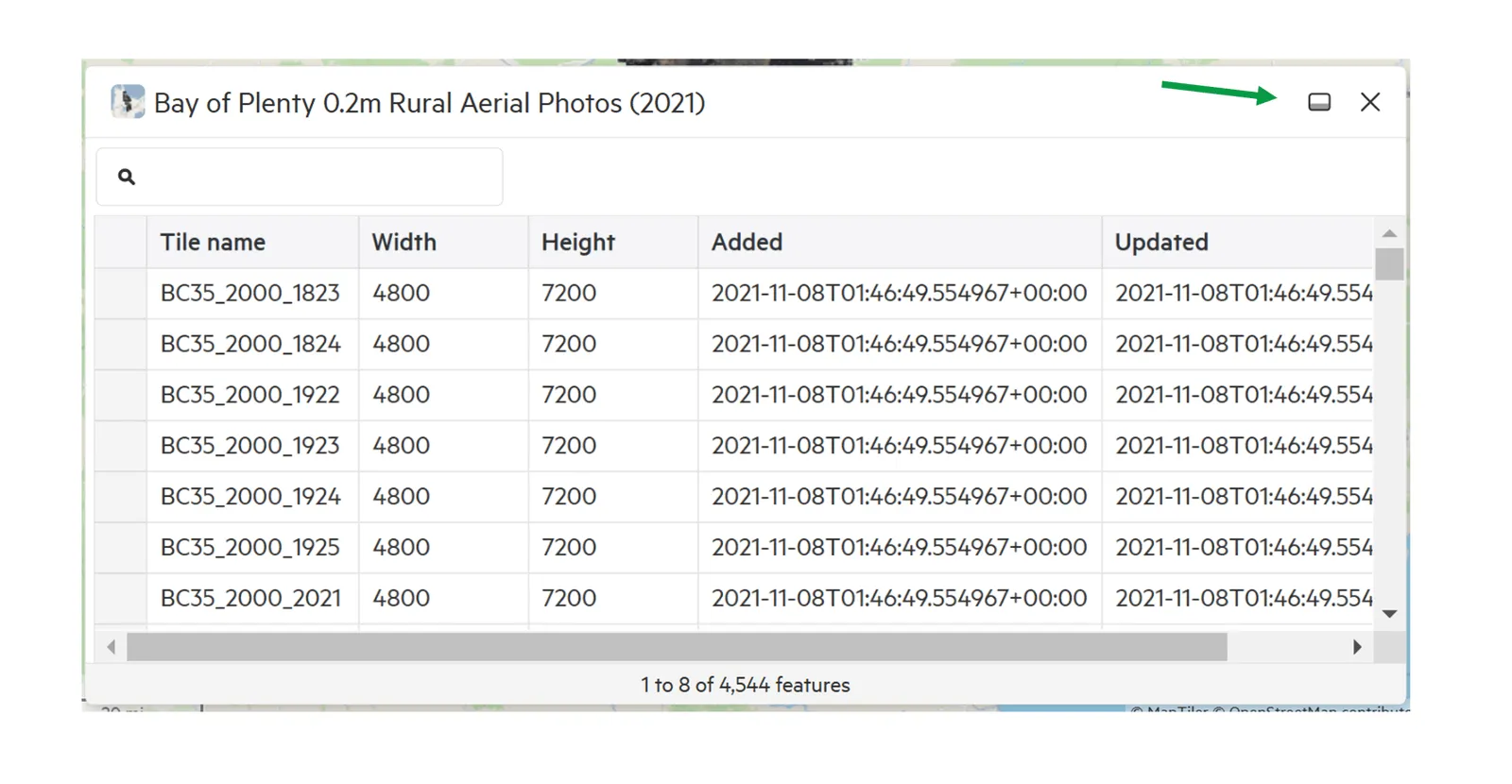
To float the table in its own window, select Separate window.