
Create a Map Viewer
The Map Viewer allows you to create, view, and share a map of data layers from within Data Management.
Create a Map Viewer
Section titled “Create a Map Viewer”-
Open the Map Viewer
Select Map in the navigation menu. If you already have a map viewer open, you can start a new one from it with the next step.
-
Create a new Map Viewer
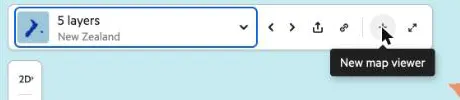
Select the + button (New map viewer) beside the map viewer’s name, at the top of the map viewer.
-
Add data layers
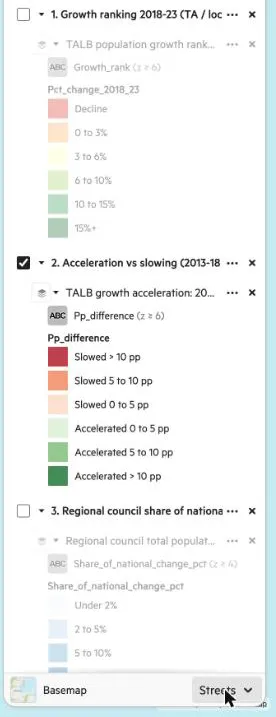
Open the dataset you want in the Data Manager and select its Map + button. The button changes to Map ✕ once the dataset is in the map viewer, and you can select it again to take the dataset out.
You can add:
- More than one data layer to the same map viewer.
- Any data you have permission to view.
- Sets of data layers. Learn more about Sets.

-
Choose a basemap
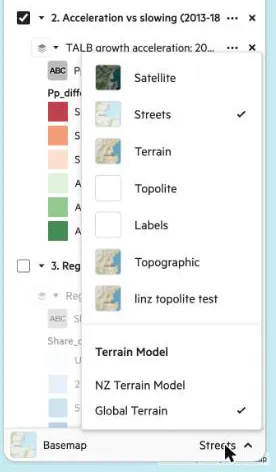
Use the Basemap selector in the layer list to choose the map the layers sit on. The basemaps on offer depend on how your site is set up. On a customer site, site admins on Business Cloud and Enterprise plans choose them in Configuring custom basemaps and terrain for map viewers.
Using the Map Viewer
Section titled “Using the Map Viewer”There are a range of other operations available when using the Map Viewer. The following operations are explained for the fullscreen map, though most are also available in side-panel and mini-map mode.
Toggle layers on and off
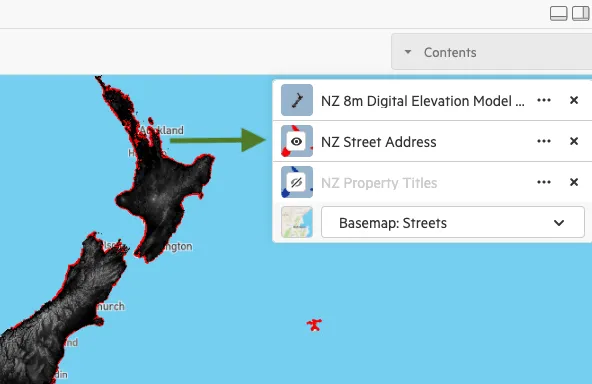
Section titled “Toggle layers on and off”To toggle layers on and off, click the small thumbnail next to the title of the data layer. If the layer is displayed in the map, you will see a small ‘eye.’
Change the order of layers on the Map Viewer
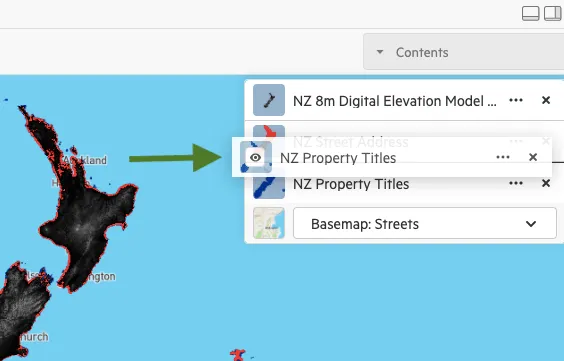
Section titled “Change the order of layers on the Map Viewer”You can change the order of layers in your map viewer by ‘dragging’ a layer up or down. The layer on the top of the list will appear ‘on top’ in the Map Viewer.
Change the visibility of a data layer
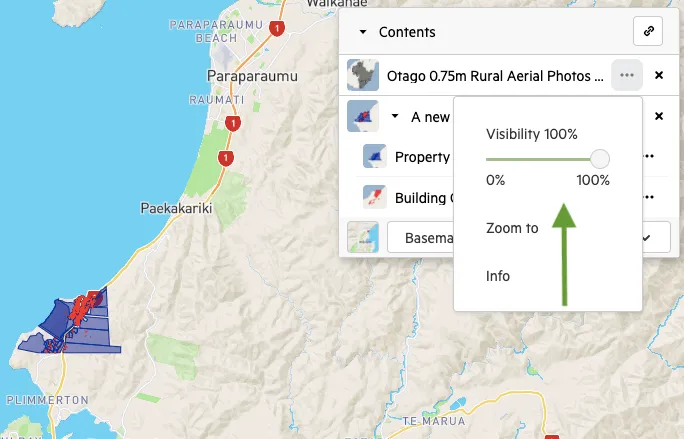
Section titled “Change the visibility of a data layer”To change the visibility of a data layer, simply click the ellipses for your data layer, and toggle the layer’s visibility between 0 (fully transparent) and 100%.
Change map cartographic styles
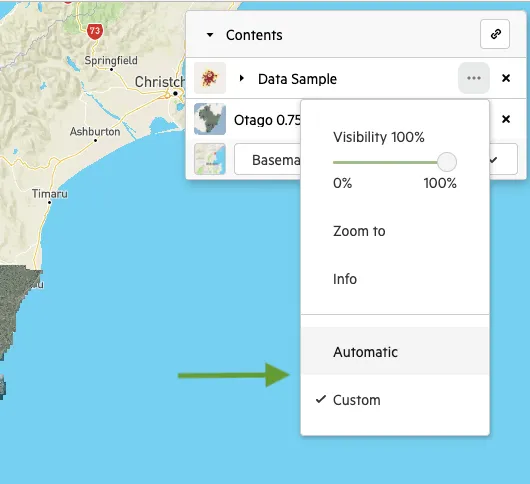
Section titled “Change map cartographic styles”If you have created custom cartographic styles for a layer, you can switch these on for your Map Viewer. Simply click the ellipses for your data layer, and you’ll have the option to toggle between ‘Automatic’ and ‘Custom’ map styles.
To learn more about creating custom cartographic styles, read ‘Add cartographic styles to data using CartoCSS.’
View a Set of multiple data layers
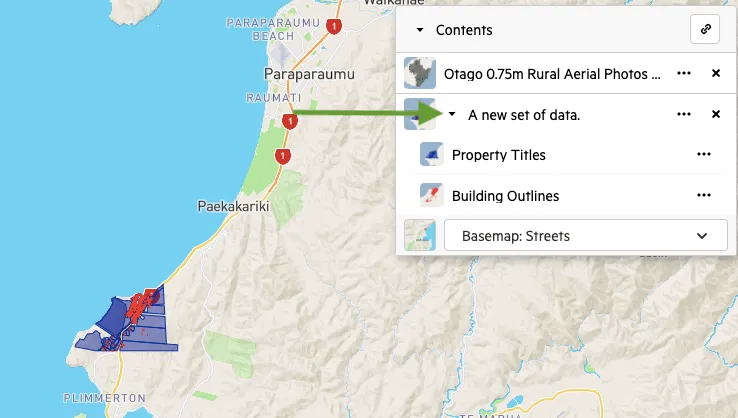
Section titled “View a Set of multiple data layers”Map Viewers can contain Sets, which are containers for multiple data items that can be added and viewed all at once. A Set has many of the same options as an individual data layer.
You can also choose to click the drop down arrow for your Set, which will reveal the Set’s data layers. You can then edit the visibility of that layer — including its position, transparency, visibility, and zoom — independently of the Set as a whole.
Make a copy of a Map Viewer
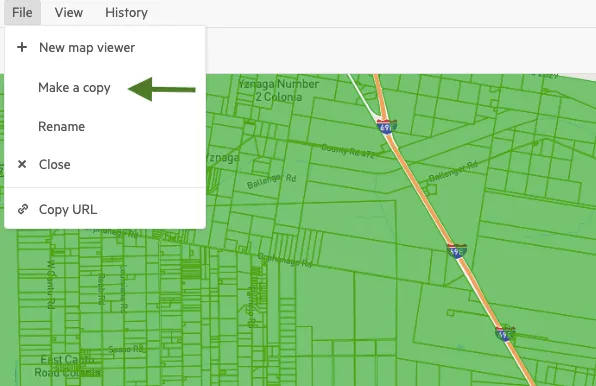
Section titled “Make a copy of a Map Viewer”To make a copy of a Map Viewer, open the menu beside the map viewer’s name (the down arrow) and select Make a copy. This will duplicate your Map Viewer state and allow you to make changes without affecting the original Map Viewer.
Rename a Map Viewer
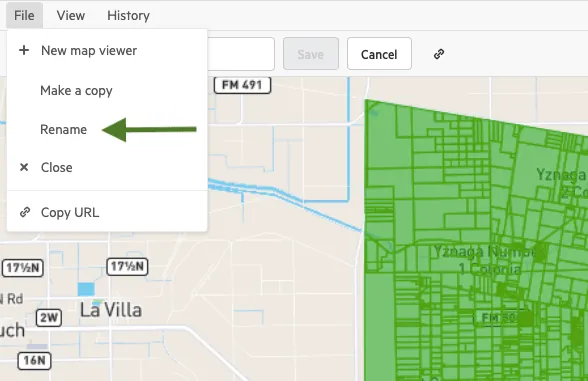
Section titled “Rename a Map Viewer”To rename your Map Viewer, open the menu beside the map viewer’s name (the down arrow) and select Rename. Enter your new name, and then click ‘Save.’
Share a Map Viewer
Section titled “Share a Map Viewer”There are two ways to share a map viewer: send a link, or publish it.
Copy a link. Select the Copy map viewer link button beside the map viewer’s name. The people you send it to need to be signed in and have at least View permission on the data in the map viewer.
Publish it. Select Share to open the share dialog. In the dialog:
- Choose an Owning Group. If the dialog says No available groups, cannot share, you aren’t in a group that can own a published map viewer.
- Under General Access, choose who can see it:
- Not published: the map viewer doesn’t appear in the data browser.
- Private: only members of the owning group can find or view it.
- Unlisted private (if your site allows it): only members of the owning group can open it, at its unique URL. It isn’t discoverable through search.
- Public: anybody can find and view it.
- <your site name> registered users: only registered users of the site can find and view it.
- Select Share (Done if the map viewer is already published). The dialog then shows links you can copy with Copy link.
Which options you see depends on your permissions. The Public and registered-users options need extra rights on the site, and Unlisted private depends on a site setting. If your site restricts shared map viewers to paid seats, the dialog says so.
The links are:
- Share permalink: updates to the published map viewer are reflected automatically.
- Permalink w/ location: as above, and the map’s X, Y and zoom are included in the URL.
- Recreate map viewer: opens a copy of the map viewer as it is now. Future updates aren’t reflected.
When you change a published map viewer, the dialog lists the changes as Significant changes and Insignificant changes, and saves them when you select Done. To remove a published map viewer, use Delete in the menu beside the map viewer’s name (available once the map viewer is published) and confirm in the Delete map viewer dialog. It’s permanent and can’t be undone.
How many map viewers a site can publish depends on its plan. See Features by plan.
For the tools in the map viewer toolbar, see Map viewer tools.